
What Europeans Should Bring to Morocco: Travel Essentials You’ll Miss
Traveling to Morocco from Europe is an exciting experience filled with new colors, flavors, and cultural discoveries. While Morocco is a well-developed country with modern cities, comfortable accommodations, and plenty of shops, some everyday items that Europeans use in their daily lives are not always easy to find, or may be different from what you’re used to.
This often surprises first-time visitors. It’s not that Morocco lacks essentials, but certain products, brands, habits, and travel conveniences simply work differently here. As a result, some travelers feel a bit frustrated when they can’t easily find familiar items, especially outside major cities.
To help you travel more comfortably and avoid unnecessary stress, this guide highlights the most important things Europeans should bring with them when visiting Morocco, practical items that can make a big difference during your trip and allow you to focus on enjoying the journey rather than searching for everyday essentials.
1. Personal Toiletries & Favorite Brands
One of the most common surprises for European travelers in Morocco is finding that their favorite toiletries and cosmetic brands are not always available, especially outside major cities like Marrakech, Casablanca, or Fes.
Morocco has plenty of pharmacies and shops, but the brands, formulas, and product types can be very different from what Europeans are used to. Travelers with sensitive skin, specific hair products, or preferred hygiene items often regret not packing them in advance.
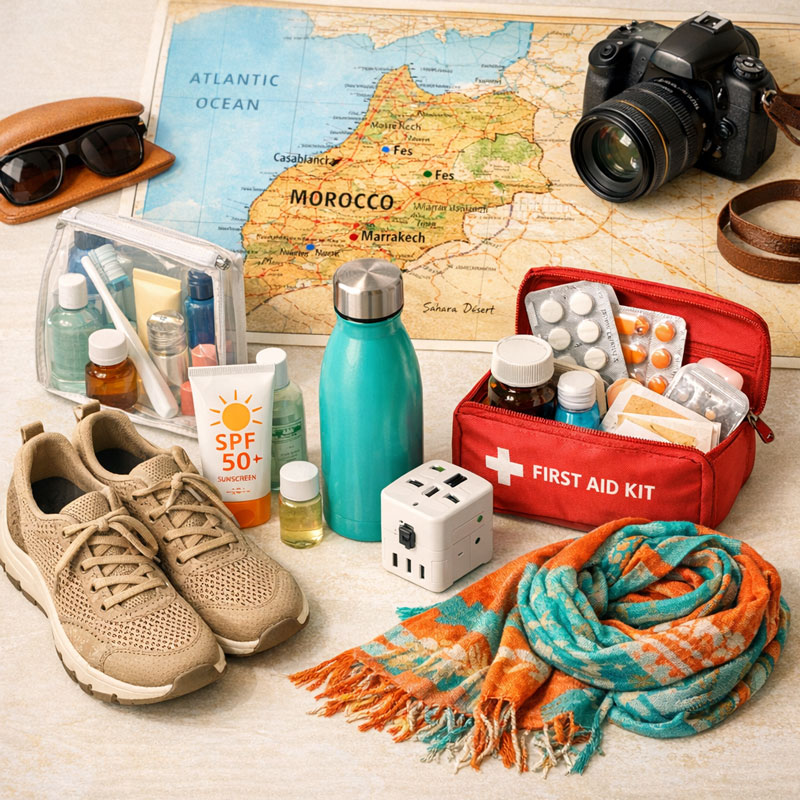
It’s recommended to bring:
- Shampoo, conditioner, or skincare products you regularly use
- Sunscreen (especially high-protection formulas)
- Deodorant (spray and roll-on options are limited)
- Feminine hygiene products, especially tampons
- Contact lens solution and eye drops
While you can find basic alternatives locally, having your own trusted products will save time and make your trip more comfortable, particularly if you’re traveling to rural areas, the desert, or small towns.
2. A Small Personal Medicine Kit
Although pharmacies are widely available across Morocco, European travelers are often surprised to discover that medication brand names, dosages, and packaging can be quite different from what they are used to back home. Instructions are usually in French or Arabic, which can be confusing for some visitors.
For this reason, it’s a good idea to bring a small personal medicine kit with you, especially if you’re traveling for several days or visiting remote areas.
Consider packing:
- Painkillers you normally use (paracetamol, ibuprofen, etc.)
- Stomach and digestion medicine
- Anti-diarrhea tablets
- Motion sickness medication
Any prescription medication you take regularly (with a copy of the prescription)
Having your own basic medicines can save you time and stress and help you deal quickly with minor health issues, allowing you to continue enjoying your trip without interruptions.
3. Comfortable Walking Shoes (Already Broken In)
European travelers are used to walking a lot, and Morocco is no exception. In fact, exploring Moroccan cities often involves even more walking, especially in old medinas, historic quarters, and souks where cars cannot enter.
However, many streets are uneven, narrow, or paved with cobblestones, and desert or mountain areas require sturdy footwear. While shoes are widely sold in Morocco, finding comfortable walking shoes in European styles and sizes can be challenging, particularly outside large cities.
What to bring:
- Comfortable walking or hiking shoes
- Sandals with good support (not just fashion sandals)
- Shoes you have already worn and broken in
Proper footwear will make a big difference in your daily comfort, whether you’re walking through the medina of Fes, exploring Marrakech, or spending time in the Sahara Desert.
4. Power Adapters & Charging Essentials
Although Morocco uses electricity sockets similar to most European countries (Type C and E), travelers are often surprised by the limited number of power outlets, especially in traditional riads, guesthouses, and older hotels.
It’s common to find only one or two sockets per room, which can quickly become inconvenient if you need to charge multiple devices such as phones, cameras, power banks, or smartwatches.
Recommended items to bring:
- A universal travel adapter (just in case)
- A small power strip or multi-plug
- A power bank for long travel days
These simple items can save you a lot of frustration, particularly during road trips, desert tours, or overnight stays in remote areas where access to electricity may be limited.
5. Cash and Payment Options
In many parts of Europe, travelers are used to relying almost entirely on credit or debit cards. In Morocco, however, cash is king, especially in smaller towns, local markets, taxis, and rural areas. While ATMs are common in cities, they may be scarce outside urban centers, and some establishments only accept cash.
Tips for managing money in Morocco:
- Carry a reasonable amount of cash in Moroccan Dirhams for daily expenses
- Keep some euros as emergency backup (easily exchangeable in banks or currency shops)
- Use debit or credit cards for hotels, large restaurants, or online bookings
- Notify your bank of your travel plans to avoid card blocks
Having both cash and card options ensures a smooth travel experience without interruptions.
Ready to Experience Morocco?
Don’t just read about it, live it! Whether you dream of wandering vibrant medinas, riding camels in the Sahara, or exploring the majestic Atlas Mountains, we’ll make your Moroccan adventure unforgettable.
Book your tour with us today and let our expert guides show you the best of Morocco, hassle-free and full of memories that will last a lifetime.
6. Clothing Layers and Travel Comfort Items
Many European travelers assume Morocco is always hot, but the reality is more varied. Desert nights can be surprisingly chilly, mountain regions can be cold, and even in cities, air-conditioned riads, cafés, and taxis can make a light jacket or sweater necessary.
Clothing essentials to bring:
- Lightweight jackets or sweaters for evenings and high-altitude areas
- Scarves (useful for sun protection, wind, and cultural respect)
- Comfortable, breathable clothes for walking and exploring
Travel comfort extras:
- Reusable water bottle (stay hydrated in the heat)
- Wet wipes or hand sanitizer (handy in markets or public places)
- Tissues (toilets often don’t provide paper)
- Earplugs (helpful in busy medinas or near streets)
Packing these items will help you feel comfortable, prepared, and relaxed, letting you focus on enjoying Morocco’s incredible sights, flavors, and culture rather than worrying about small inconveniences.
Conclusion:
Traveling to Morocco is an unforgettable experience, full of vibrant colors, rich culture, and incredible landscapes. While the country is well-equipped for travelers, Europeans often encounter small surprises when it comes to everyday items and conveniences they take for granted at home.
By bringing a few key essentials, from personal toiletries and favorite medicines to comfortable shoes, cash, adapters, and travel comfort items, you can avoid common frustrations and focus entirely on enjoying your trip.
Planning and packing thoughtfully not only makes your journey smoother but also allows you to immerse yourself fully in the Moroccan experience, whether wandering through bustling medinas, exploring the Sahara Desert, or relaxing in the Atlas Mountains.
Tip: Keep this list handy as you pack, and you’ll be ready for an unforgettable Moroccan adventure!
